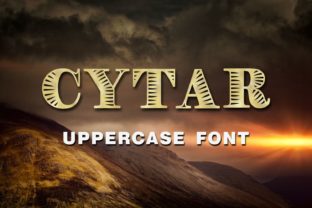
Cytar Uppercase Display Font for Handmade Creators
As someone who designs printable wall art, cuts vinyl stickers for small-batch candles, and prints boutique gift tags for local makers, I’ve learned that the right display font does more than look pretty—it carries intention, signals quality, and quietly tells your customer, “This was made with care.” That’s exactly why Cytar has become one of my go-to typefaces. It’s not just another uppercase font; it’s a carefully crafted, confident, and warmly human display typeface—designed to shine on physical products without sacrificing clarity or charm.
Cytar’s personality sits beautifully between modern and timeless: clean lines, subtle character in each letterform, and a gentle rhythm that makes all-caps text feel intentional rather than shouty. There are no exaggerated serifs or distracting flourishes—just thoughtful spacing, balanced weight, and a quiet confidence that reads as both handmade and professional. Whether you’re laser-cutting wooden signs or printing 1-inch sticker labels for soap bars, Cytar holds up with grace. Its uppercase-only structure means it’s built for impact—not paragraphs—and excels where attention needs to land fast: product names, shop banners, greeting card headlines, and welcome boards at weddings or baby showers.
I use Cytar most often for projects where legibility and emotional resonance matter equally. Think: farmhouse-style wall art with phrases like “Gather Here” or “Good Things Take Time”—Cytar gives those words grounded warmth. For candle labels, I pair it with a soft sans serif body font (like Montserrat or Lato) so the scent name pops in Cytar while ingredients stay crisp and readable. On vinyl-cut stickers for mugs or tote bags, its sturdy proportions prevent thin strokes from breaking during weeding—especially important when working with fine-point blades on Cricut or Silhouette machines. And because it’s designed for display use, it scales beautifully: whether it’s 8pt on a tea bag tag or 120pt on a chalkboard-style wedding welcome sign, Cytar stays sharp and friendly.
For printable creators, Cytar adds instant polish to digital downloads. I’ve used it in planner cover pages (“Your Year, Your Way”), holiday-themed SVG bundles (“Cozy & Merry”), and editable invitation templates where clients want something distinctive but still easy to read at a glance. Its even stroke weight and open counters mean it renders cleanly across devices—no fuzzy edges in PDF previews or blurry text in Canva mockups. When customers download a printable, that first visual impression matters. Cytar helps your work feel premium, cohesive, and thoughtfully designed—not templated.
Pairing Cytar is intuitive and effective. Since it’s an expressive yet restrained uppercase display font, I often balance it with something softer or more functional: a relaxed script font for names or accents (think hand-lettered “Est. 2023” beneath a shop logo), or a clean sans serif for body copy and instructions. For wedding stationery, I’ll set “The Smith & Lee Wedding” in Cytar and follow with a delicate serif like Playfair Display for the date and location—creating hierarchy without clutter. For product packaging, I’ll use Cytar for the brand name and switch to a highly legible monospaced or geometric sans for net weight and ingredients. The contrast works because Cytar doesn’t compete—it anchors.
Before adding Cytar to your next project, check what’s included in your license. As a craft-focused display font, it typically comes in OTF and TTF formats—both fully compatible with Cricut Design Space, Silhouette Studio, Adobe Creative Cloud, and Canva. While the core version is uppercase only (which is perfect for its intended display role), some versions include stylistic alternates or basic ligatures—great for avoiding repetitive letter combinations in longer phrases like “Bakery & Bakeshop.” It doesn’t include lowercase or multilingual glyphs, so keep that in mind if you’re designing for bilingual markets or need full typographic flexibility. But for the vast majority of handmade product uses—labels, tags, signs, cards, and digital printables—it delivers exactly what you need: strong presence, clear voice, and consistent appeal.
Licensing is where many makers pause—and rightly so. If you’re selling physical products (like engraved coasters or printed tea towels), using Cytar in your designs is fully allowed under standard commercial font licenses. Same goes for digital downloads: editable Canva templates, layered PSD files, SVG cut files, and printable planners all fall within typical commercial use terms—as long as you’re not reselling the font file itself. Always double-check the license from your trusted vendor, but know this: Cytar was built for creators like us. It’s meant to live in your Etsy listings, your craft fair booth signage, your Shopify product pages, and your client’s custom wedding suite—not locked away in a design vault.
Real-world examples I’ve made with Cytar lately? A set of lavender-scented candle labels for a local apothecary—“Serenity,” “Clarity,” “Stillness” in Cytar, with minimalist botanical line art beside each. A bundle of printable Easter egg hunt clues where each clue starts with a bold Cytar header (“Follow the Bunny’s Trail”) before diving into playful body text. A series of 5x7 framed wall quotes for a boutique gift shop—each printed on textured cotton paper, with Cytar giving the words quiet authority. Even seasonal items: “Joyful,” “Grateful,” “Present” on holiday gift tags, laser-cut from kraft cardstock and tied with twine.
What makes Cytar different isn’t flashiness—it’s reliability wrapped in character. It doesn’t distract. It doesn’t overwhelm. It simply elevates. In a world where handmade goods compete for attention online and in person, typography is one of the few tools we control completely. With Cytar, you’re not just choosing a font—you’re choosing how your craft is first perceived, remembered, and valued.